Your Grandma's Soup Knew About Electrolytes Before the Sports Drink Industry Did
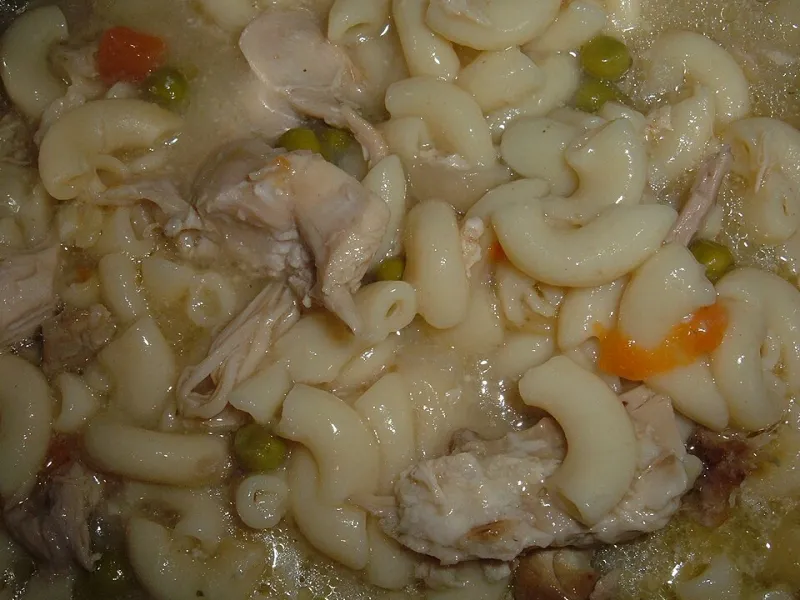
Photo: BrokenSphere, CC BY-SA 3.0, via Wikimedia Commons
There's a moment in nearly every American childhood: you're sick, miserable, and a bowl of golden chicken soup appears at your bedside. Grandma insisted it would fix you. Turns out, she wasn't just being sweet — she was practicing fluid physiology she'd never heard of.
At BeliFin Hydration, we spend a lot of time reading labels on fancy electrolyte products. But lately we've been looking at something older, cheaper, and probably already in your freezer: homemade broth.
The Sodium Problem Nobody Talks About
Here's the counterintuitive part of hydration science: water alone doesn't always hydrate you especially well. Drink a big glass of plain water fast, and your kidneys treat it like a hot potato — filtering it out within a couple of hours. What helps your body actually hold onto fluid is sodium, which triggers water retention in the bloodstream.
This is the entire reason sports drinks exist. The electrolytes in that bright blue bottle aren't there for flavor; they're there to keep fluid in your system rather than running straight through you.
And sodium? That's the signature mineral of soup.
What's Actually in That Bowl
A cup of homemade chicken broth typically delivers somewhere in the range of 300 to 500 milligrams of sodium, along with modest amounts of potassium from vegetables like celery, carrots, and onions. Compare that to a standard 20-ounce sports drink, which carries roughly 250 to 300 milligrams of sodium across the whole bottle.
In other words, one honest bowl of soup can out-electrolyte an entire bottle of something that costs $3 at the gas station.
The soup also brings something the bottle can't: volume and warmth. The fluid itself, the sodium, and a bit of protein and gelatin all arrive together in a form your digestive system handles gently. When researchers have studied pre-load strategies for fluid retention, sodium-containing soups and broths consistently perform well at keeping blood volume stable.
The Broth vs. the Brand Name
Let's be fair to the sports drink industry — it has a role. During long, sweaty endurance efforts in July heat, a chilled bottle with fast-absorbing carbs and electrolytes is genuinely useful. Nobody's arguing you should hand a marathoner a crock of soup at mile 18.
But most of us aren't marathoners most days. We're mildly dehydrated office workers, parents chasing kids around, people recovering from a stomach bug or a rough flight. For everyday fluid maintenance, the comparison gets awkward for the $40 tub of powder:
- Cost: A pot of soup made from a chicken carcass, scrap vegetables, and water runs a dollar or two per quart. Premium electrolyte mixes can cost $1.50 or more per serving.
- Sodium per ounce: Broth competes easily, and you control the salt.
- Bonus nutrients: Potassium, a little magnesium from bone and vegetables, plus actual food.
- Zero artificial dyes: Unless your grandma had a very unusual cooking style.
The Traditional Remedies Were Onto Something
Chicken soup isn't the only old-school remedy that doubles as an electrolyte delivery system. Consider the global pattern:
- Pho in Vietnam, with its mineral-rich long-simmered broth
- Miso soup in Japan — fermented paste is a sodium powerhouse
- Consomé and caldo across Mexico and Latin America
- Pickle juice, the Southern athlete's folk remedy, now backed by actual research on cramping
Across cultures, communities that dealt with hard physical labor and hot climates independently converged on the same solution: salted liquid, served warm, with food alongside. That's oral rehydration therapy with a recipe.
How to Make Your Kitchen a Hydration Station
Want to put this into practice? A few low-effort moves:
- Save the bones. After a roast chicken, toss the carcass in the freezer. When you've got two, you've got soup.
- Salt sensibly. If you're drinking plenty of water and eating mostly whole foods, a properly salted broth is where your sodium should come from — not from fear-free blandness.
- Sip, don't chug. A warm mug of broth in the afternoon works like a slow-release hydration tool, similar to the steady-sipping approach we've recommended before.
- Watch the canned stuff. Store-bought broth can be great, but check the label — some versions are loaded with more sodium than you need, and some 'low sodium' versions barely hydrate better than water.
The Bottom Line
The electrolyte market is worth billions, and some of its products are legitimately good. But the core science — sodium helps your body retain fluid — was being practiced in American kitchens for generations before anyone printed it on a shiny label.
So the next time you're feeling foggy, drained, or run-down, you have options. One of them costs $40 and comes in a tub. The other is simmering on your stove for the price of a carrot.
Grandma would say she told you so. She'd be right.