TSA-Proof Your Water Bottle: A Field Guide to Staying Hydrated at 30,000 Feet, 70 MPH, and Everywhere Between
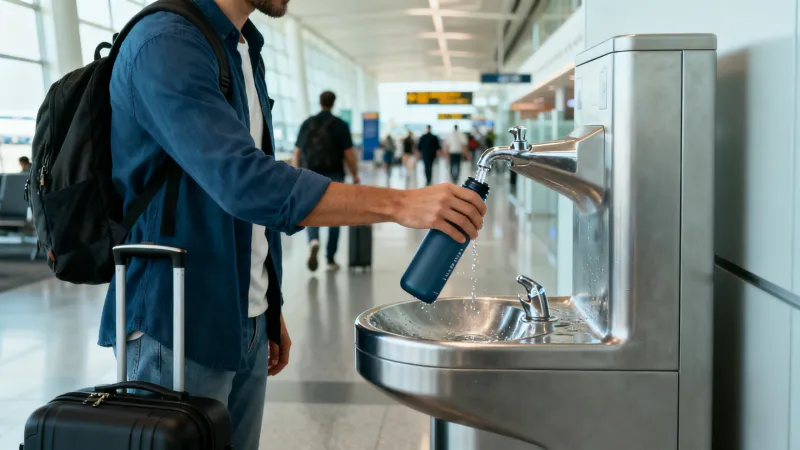
Photo: traveler filling water bottle at airport gate filling station, via wander-write--info7915.replit.app
There's a specific kind of thirst that hits somewhere over Kansas. You didn't notice it at the gate. You didn't notice it during boarding. But three hours into a cross-country flight, your lips are chapped, your head feels fuzzy, and the tiny cup of water the flight attendant handed you feels like a cruel joke.
Travel dehydration isn't in your imagination. It's physics, physiology, and a lifestyle built around places where water is either expensive, inconvenient, or behind security checkpoint rules. Let's break down the three most dehydrating arenas of American life — and how to outsmart each one.
Why Airplane Cabins Are Basically a Desert
Cabin humidity on a typical commercial flight sits between 10 and 20 percent. For comparison, the Sahara Desert averages around 25 percent humidity. Your body loses moisture through breath and skin every minute you're up there, and you don't feel it the way you feel sweat.
Add the factors that stack on top: alcohol at the airport bar (a diuretic), salty pretzels and airline snacks, and the very reasonable decision to not drink much water because the bathroom situation on a full flight is, well, a situation.
The airport game plan:
- Empty bottle through security, fill it at the gate. TSA rules allow empty containers of any size. Nearly every US airport now has bottle-filling stations — often right next to the drinking fountains near the gates.
- Powdered electrolyte packets in your carry-on. They're not liquid, so they sail through screening. Mix once you're past security or on the plane.
- Skip the pre-flight beer. If you want one, match it with a glass of water before boarding. Alcohol plus cabin air is a double moisture drain and a one-way ticket to landing with a headache.
- Aisle seat strategy: if staying hydrated means three bathroom trips, book the aisle and drink without guilt. Your kidneys don't care about your seat assignment.
The Road Trip Problem: AC, Coffee, and Not Wanting to Stop
Long drives seem less dehydrating than flying — you can literally bring a cooler. But highway travel has its own traps:
- Air conditioning pulls moisture from the air (and from your skin and airways) the same way cabin air does, just more gently over more hours.
- Highway coffee culture. A 16-ounce gas station coffee is a road trip ritual, and while moderate caffeine doesn't dehydrate you the way people claim, it does make you feel like you've had your fluids when you haven't.
- The bathroom math. Nobody wants to stop every 45 minutes, so many drivers deliberately under-drink. That's the real hazard — chronic mild dehydration across an eight-hour drive, which shows up as fatigue and irritability around mile 400.
The road game plan: Sip consistently instead of chugging. Keep a bottle in the cupholder and finish one per two hours of driving. Pack salty snacks deliberately — pretzels and trail mix pair well with water and help you retain fluid. And plan your rest stops around hydration instead of avoiding them: a two-minute stretch-and-fill-up break every 90 minutes is better for your body and your alertness than powering through.
Tailgates, Ballgames, and All-Day Outdoor Events
An October tailgate or a summer festival is a different beast: hours on your feet, sun exposure, and a beverage menu that leans heavily toward beer and seltzers. Alcohol plus heat plus walking equals steady fluid loss, and the festive atmosphere hides the warning signs until you're genuinely wiped out.
The tailgate game plan:
- The one-to-one rule: a full glass of water for every alcoholic drink. Rotate through a cooler stocked with both.
- Eat your electrolytes. Chips, brats, and pickles aren't just tailgate classics — the sodium helps your body hold onto fluid in the heat.
- Set up in the shade when you can. Canopy beats sunshine for fluid retention, and your sunscreen budget thanks you.
- Bring more water than you think. A good rule of thumb for all-day outdoor events: at least one gallon per person, more if it's hot or you're active.
Your Printable Travel Hydration Checklist
Copy this into your notes app or tape it inside your suitcase:
Carry-on / glovebox:
- Collapsible or empty water bottle
- 2–3 electrolyte powder packets
- Lip balm (trust us)
Cooler / bag:
- One gallon of water per person per half-day event
- Salty snacks to aid fluid retention
- Water for the drive home — the trip isn't over until you're back
Habits:
- One glass of water per alcoholic drink
- Sip every 20–30 minutes instead of chugging
- Bathroom breaks are hydration checkpoints, not inconveniences
The Bottom Line
You don't need a gadget or a gallon jug with motivational time markers. Travel dehydration comes down to three controllable factors: dry air, diuretics, and deliberate under-drinking. Manage those, and the gate delay, the I-95 traffic, and the fourth quarter become a lot more comfortable. Safe travels — and fill the bottle before you board.